Best small business PBX: 2026 guide for UK businesses
For most, the best small business PBX in 2026 is a cloud-hosted system. It costs less than traditional on-premise hardware, works from anywhere, scales with your team, and doesn’t need specialist IT knowledge to manage.
With the UK’s PSTN switching off in January 2027, traditional PBX systems connected to analogue phone lines are reaching end of life. If you’re still running one, now is the time to upgrade. And if you’re buying your first business phone system, cloud PBX is almost certainly the way to go.
This guide explains what PBX means in plain English, how to choose the right type for your business, and compares the best options available to UK small businesses right now.
What is a PBX and do you actually need one?
PBX stands for Private Branch Exchange. It’s the system that manages your business phone calls: routing them to the right person, handling voicemail, managing call queues, and letting your team transfer calls between each other.
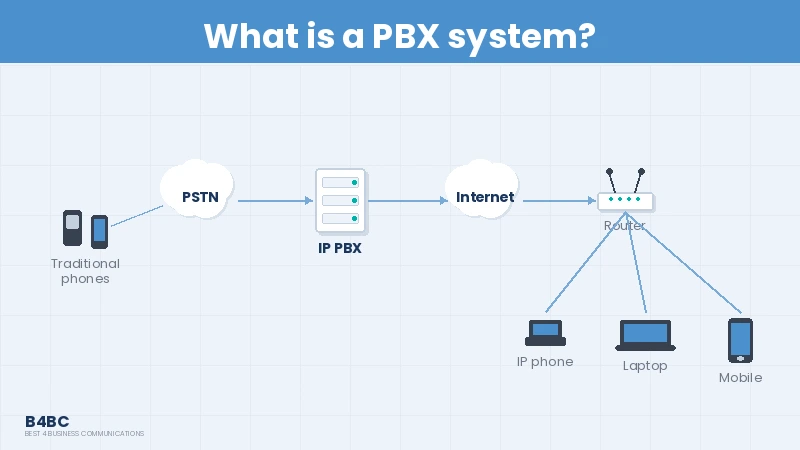
In the past, a PBX meant a physical box bolted to your office wall, often costing thousands of pounds. Today, most PBX systems live in the cloud. They run over the internet and are managed by your provider, which means no hardware to maintain and no engineer visits to keep things running.
Signs your business needs a PBX
Not every business needs a PBX, but if any of these sound familiar, it’s probably time to consider one:
- You have more than 2 or 3 people taking calls
- You need to transfer calls between team members or departments
- You want a professional greeting or auto-attendant (that “press 1 for sales, press 2 for support” feature)
- You have remote or hybrid workers who need to take calls on their business number
- You need call recording for training or compliance
- You want reporting on call volumes and patterns
When a PBX might be more than you need
If you’re a sole trader who just needs a business number on your mobile, a full PBX system might be overkill. A virtual phone number or basic VoIP line could do the job for a fraction of the cost.
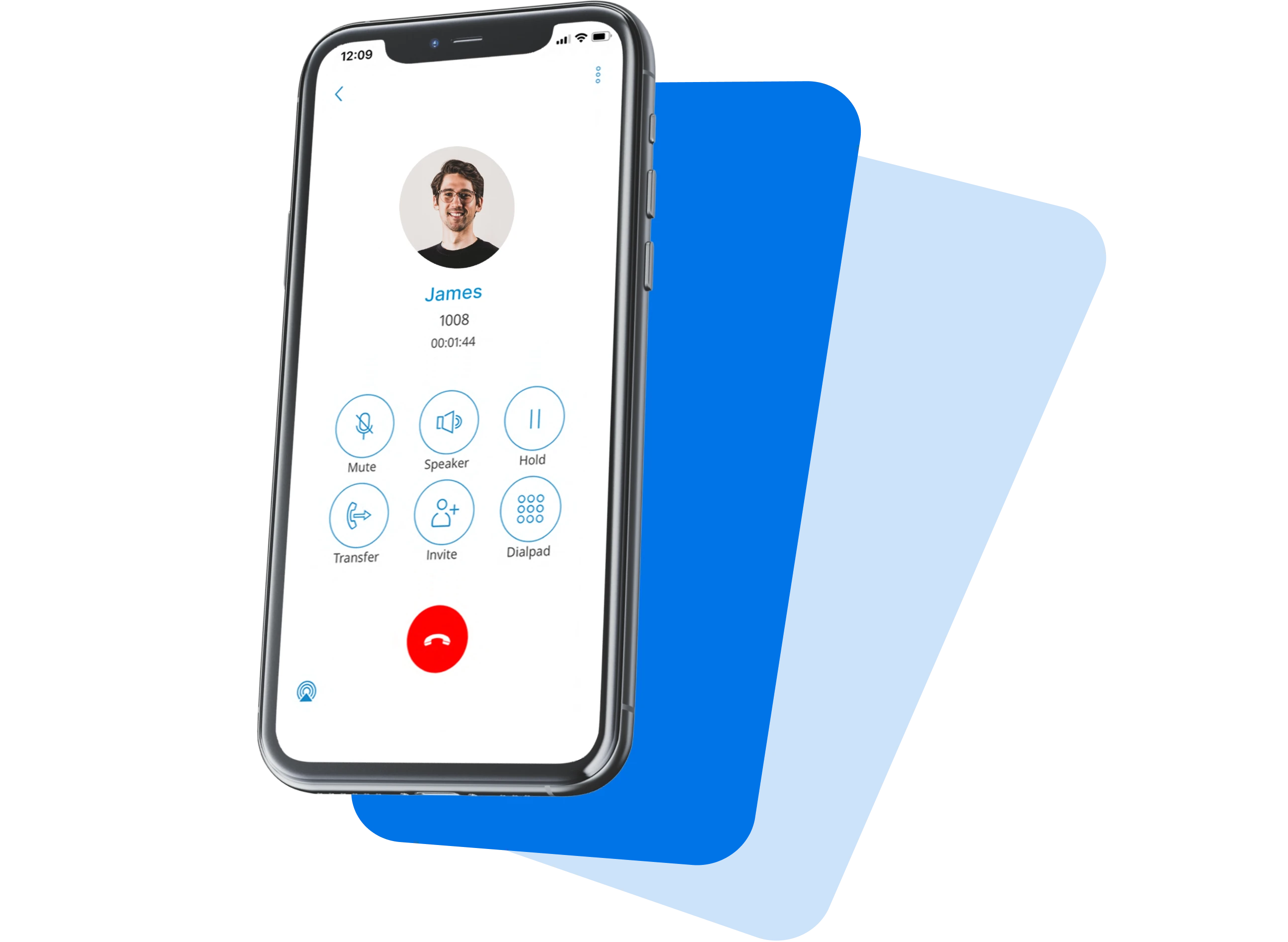
The key question is: do you need your calls managed, routed, and tracked? If yes, you need a PBX. If you just need a number that rings your phone, you probably don’t.
Cloud PBX vs on-premise PBX: which is better?
The traditional phone system model is fading fast. UK fixed voice revenues fell 16.7% year-on-year according to Ofcom’s latest telecoms market data, reflecting the accelerating shift from legacy phone systems to cloud-based alternatives.
Here’s how the two options compare in practice:
| Feature | Cloud PBX | On-premise PBX |
|---|---|---|
| Upfront cost | Low (no hardware needed) | High (£2,000+ for equipment) |
| Monthly cost | £8-25 per user | Line rental + ongoing maintenance |
| Setup time | Hours to days | Days to weeks |
| Maintenance | Provider handles everything | You or a specialist engineer |
| Remote working | Built in as standard | Requires additional configuration |
| Scalability | Add or remove users instantly | Needs hardware changes |
| PSTN switch-off ready | Yes, from day one | Needs migration if on analogue lines |
For most UK small businesses, cloud PBX is the clear winner. It’s cheaper, simpler, more flexible, and already future-proofed for the digital switchover.
On-premise PBX may still make sense for businesses with very specific compliance requirements, unreliable internet, or existing hardware they need to get value from. But those situations are increasingly rare.
What features should a small business PBX have?
Not all PBX systems are equal. When comparing options, here are the features that matter most for small businesses.
Must-have features
- Call routing and auto-attendant so callers reach the right person without you answering every call manually
- Voicemail and voicemail-to-email so you never miss a message, even when you’re away from your desk
- Mobile and desktop apps so your team can make and receive calls on their business number from anywhere
- Call recording for training, quality checks, and resolving disputes
- Call analytics to understand when calls are coming in, how long they last, and whether any are being missed
Nice-to-have features
- CRM integration (connecting calls to customer records in tools like Salesforce or HubSpot)
- Video conferencing for team meetings and client calls
- Call queuing with hold music for busier teams
- Number porting so you keep your existing phone numbers
- 24/7 UK-based support for when something goes wrong outside office hours
Best small business PBX systems in the UK for 2026
We’ve compared the leading PBX options available to UK small businesses. Each is assessed on features, pricing, UK support quality, and suitability for small teams.
B4BC (VoIPSure)
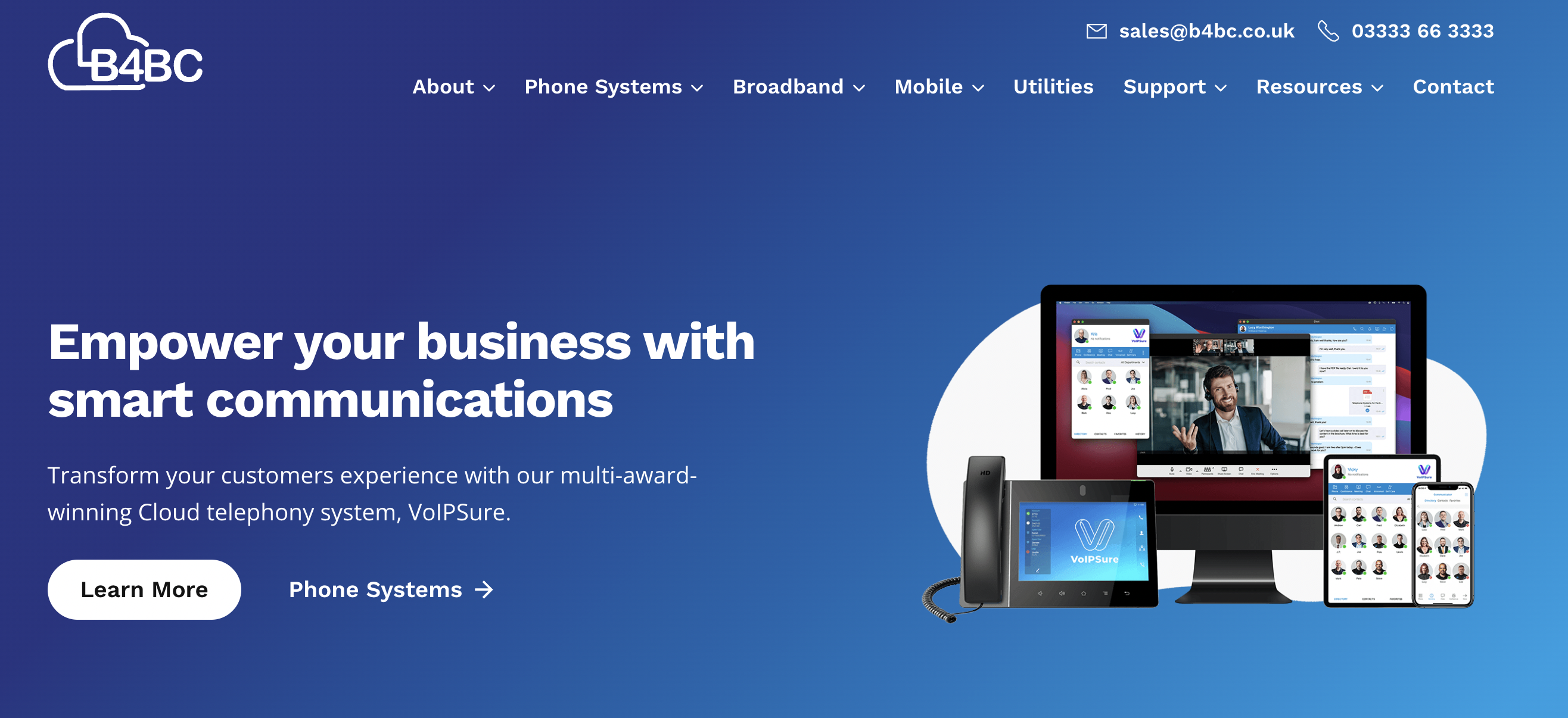
B4BC’s VoIPSure is a fully hosted cloud phone system built specifically for UK SMEs. Unlike global platforms that prioritise massive scale, VoIPSure focuses on making setup simple and support genuinely accessible.
Every customer gets a dedicated account manager, not a ticketing system. Installation can happen the same day. And the 24/7 support team is entirely UK-based, meaning you’ll speak to someone who understands your setup and can fix problems quickly.
Key features:
- Call routing, call recording, voicemail-to-email, and auto-attendant
- Mobile and desktop apps (softphone) for remote and hybrid working
- CRM integration with popular business tools
- Same-day installation available
- Flexible contracts with no long lock-ins
- Full migration support for businesses switching from legacy systems
Best for: UK small businesses (2 to 100+ users) that want a capable phone system backed by personal, responsive support.
Worth knowing: B4BC has a 4.8 out of 5 rating on Google Reviews with over 380 five-star ratings. The company is a multi-award-winning UK telecoms provider with over 20 years of experience.
3CX
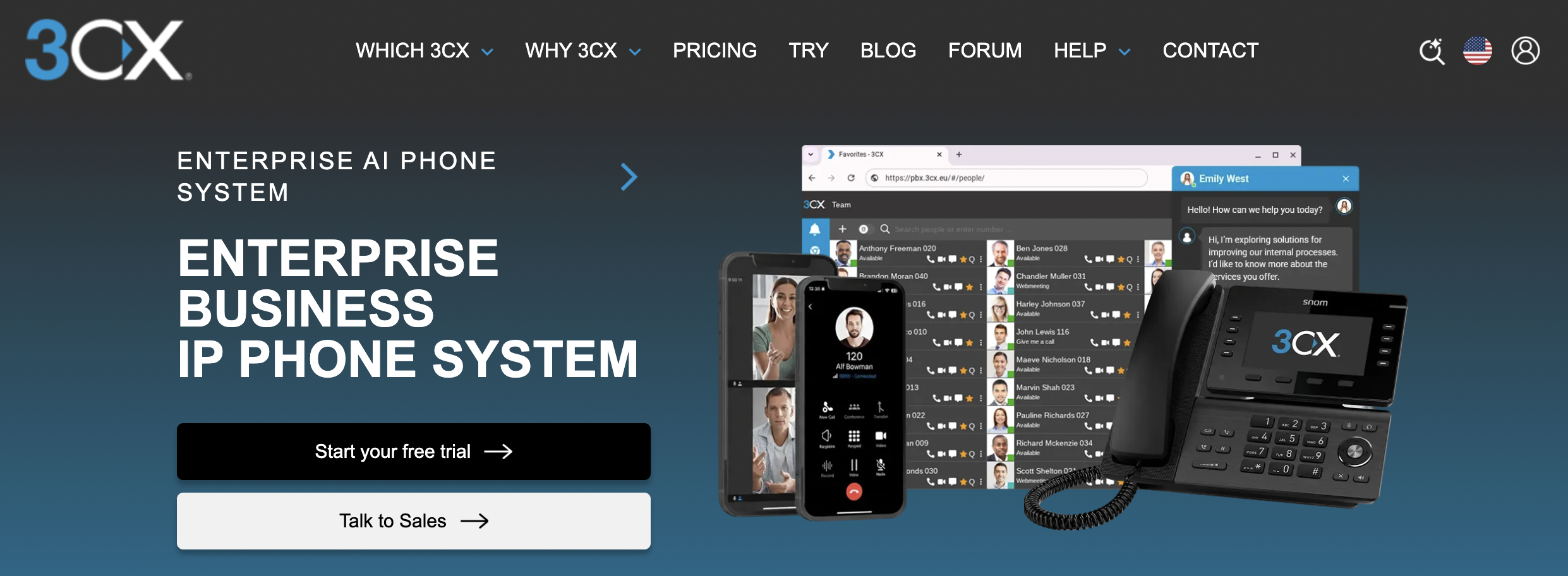
3CX is a software-based PBX that can run on-premise, in a private cloud, or as a hosted service. It appeals to businesses with in-house technical skills who want more control over their phone system.
The platform supports SIP trunking, desk phones, web clients, mobile apps, and advanced call routing. There’s a free tier for up to 10 users, which can make it attractive for very small teams willing to manage the system themselves.
Key features: SIP trunking support, web and mobile clients, call queues, video conferencing, CRM integrations.
Best for: Tech-savvy small businesses or those with IT support who want a self-managed PBX.
Limitations: Requires more technical knowledge than fully hosted alternatives. Support quality depends on your chosen hosting partner.
RingCentral
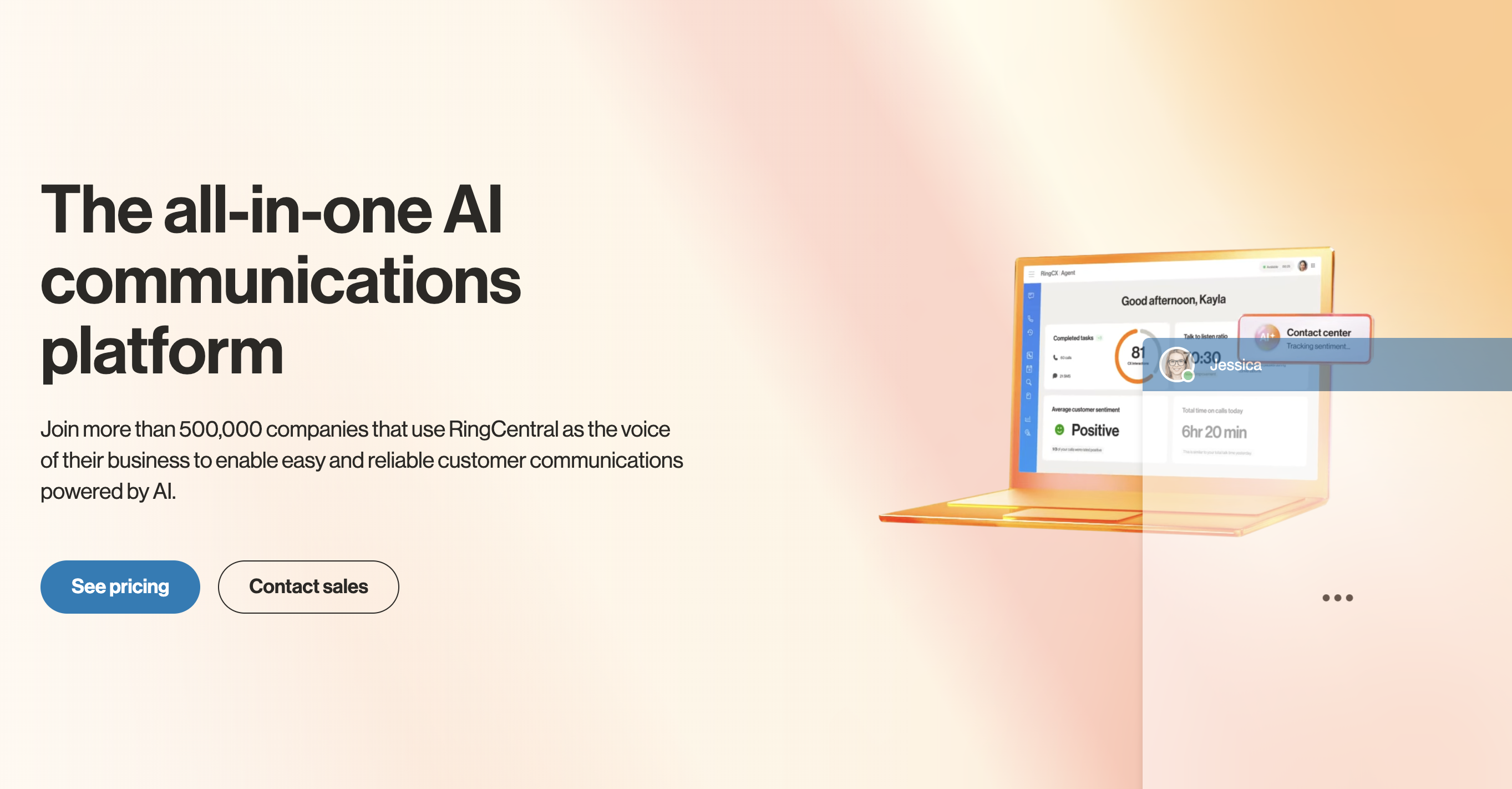
RingCentral is one of the largest cloud communications platforms globally, offering voice, video, messaging, and team collaboration in a single package. It’s feature-rich and scales from small teams to large enterprises.
Pricing starts from around £12.99 per user per month (billed annually) for UK businesses. Higher-tier plans unlock advanced features like real-time analytics, internet fax, and multi-site management.
Key features: Unlimited domestic calling, team messaging, video meetings, IVR, call analytics, extensive integrations.
Best for: Growing businesses that need a unified communications platform and plan to scale significantly.
Limitations: Can feel complex and expensive for very small teams. Support is global rather than UK-specific.
8×8
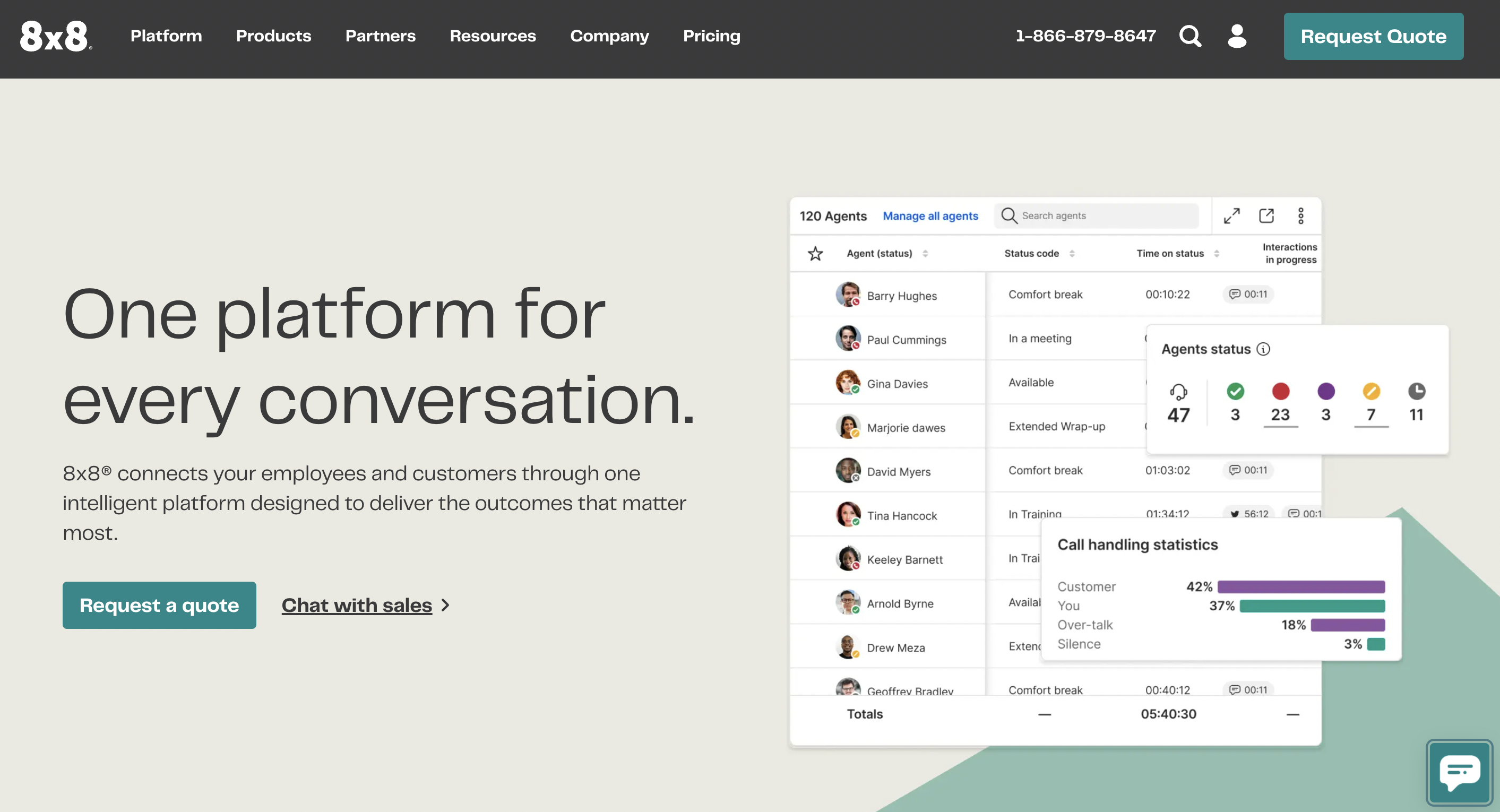
8×8 offers a cloud-based PBX with particularly strong international calling capabilities. It’s a good fit for businesses that regularly communicate with contacts overseas, offering unlimited calling to up to 48 countries depending on the plan.
The platform combines voice, video, and messaging, with contact centre features available on higher tiers.
Key features: Unlimited international calling, voice and video, team chat, call recording, analytics.
Best for: Small businesses with international clients or distributed teams across multiple countries.
Limitations: International focus means UK-specific support isn’t always as strong. Feature complexity can be overwhelming for simpler needs.
Dialpad
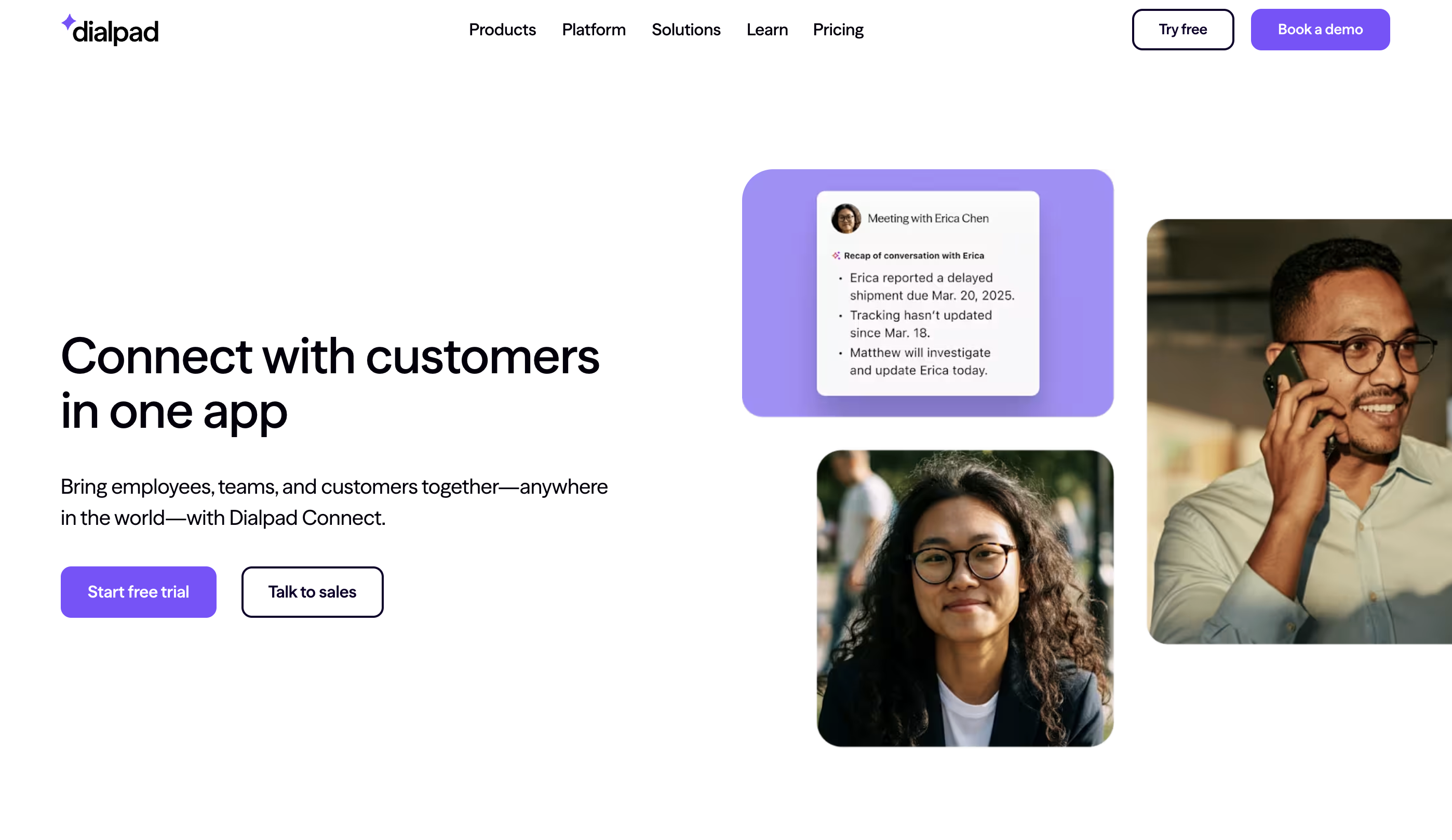
Dialpad is a cloud-based communications platform with a strong focus on AI. It offers real-time call transcription, automated call summaries, and AI-powered coaching, making it appealing for sales and support teams.
Pricing starts from around $15 per user per month. The platform integrates well with Google Workspace and Microsoft 365.
Key features: AI transcription and summaries, voice and video calling, team messaging, CRM integrations, analytics.
Best for: Small businesses that want AI-powered call insights and already use Google Workspace or Microsoft 365.
Limitations: Relatively newer to the UK market. AI features may be more than simpler businesses need.
Microsoft Teams Phone
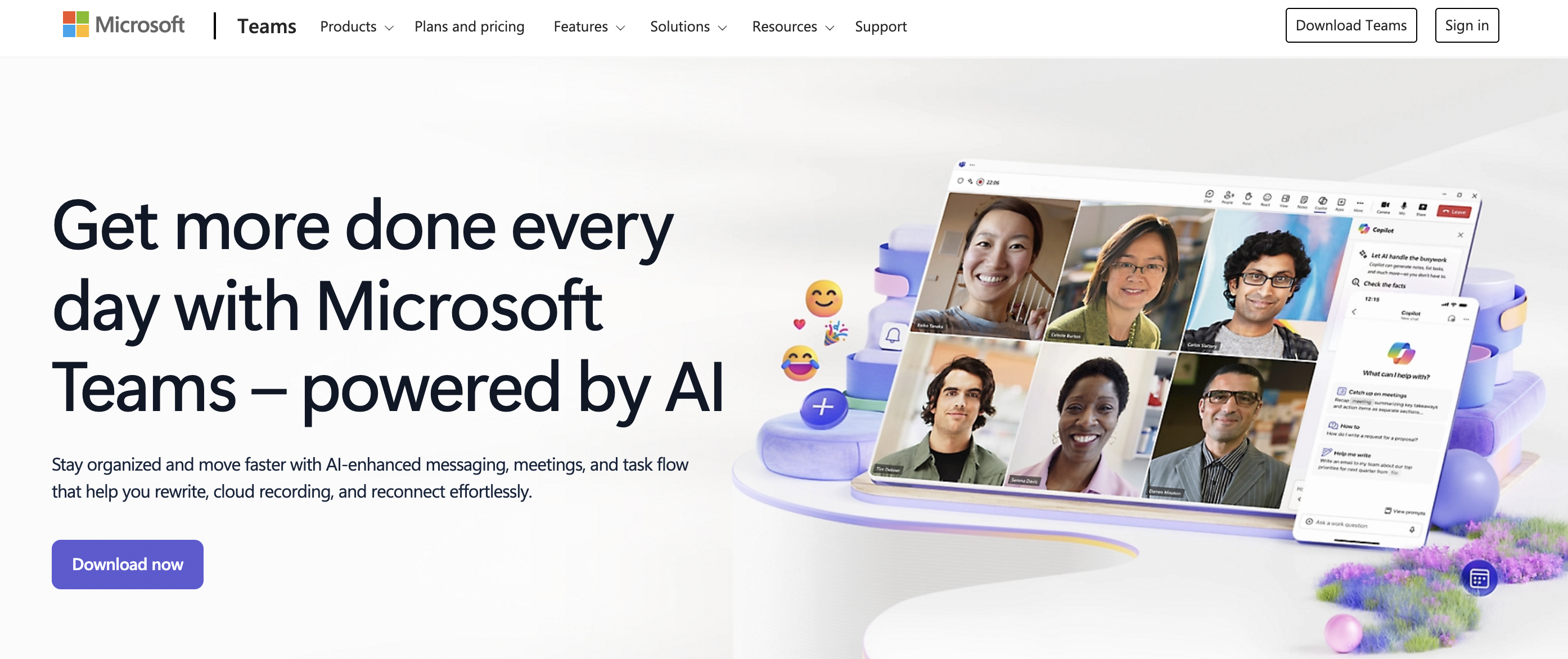
For businesses already heavily invested in Microsoft 365, Teams Phone adds PBX calling capabilities directly into the Teams app. It lets staff make and receive external calls using their business number from within the platform they already use daily.
Teams Phone requires a Microsoft 365 subscription plus an additional calling plan or direct routing setup.
Key features: Calling within Microsoft Teams, auto-attendant, call queues, voicemail, integration with the full Microsoft 365 suite.
Best for: Businesses that use Microsoft 365 extensively and want to consolidate communications into one platform.
Limitations: Phone functionality is an add-on, not a core strength. Setup can be complex, especially direct routing. Limited if your team doesn’t already live in the Microsoft ecosystem.
How much does a small business PBX cost?
Understanding the real cost helps you compare options fairly. Here’s what UK businesses should budget in 2026.
Cloud PBX pricing
Most cloud PBX systems charge per user per month, typically between £8 and £25 depending on the features included. If you want physical desk phones, budget £60 to £150 per handset for quality IP phones from brands like Yealink or Poly. Many businesses skip hardware entirely and use softphone apps on laptops and mobiles instead.
On-premise PBX pricing
Traditional on-premise systems require an upfront hardware investment of £2,000 or more, plus ongoing line rental (around £15 to £20 per line per month) and maintenance costs. Over three years, this typically works out significantly more expensive than cloud PBX.
Cost comparison for a 10-person team
| Cost element | Cloud PBX (3 years) | On-premise PBX (3 years) |
|---|---|---|
| Hardware | £0 (using softphones) | £2,500+ |
| Monthly service | £150/month (£5,400 total) | £200/month line rental + calls |
| Maintenance | Included | £500-1,000/year |
| Estimated 3-year total | ~£5,400 | ~£10,700+ |
Figures are estimates for illustration. Actual costs depend on your provider, plan, and configuration.
How to choose the best small business PBX
With so many options, here’s a simple checklist to help you decide:
- Count your users and estimate growth. A system for 5 people today might need to handle 20 in a couple of years
- List your must-have features. Don’t pay for enterprise tools you’ll never use
- Check your broadband speed and reliability. VoIP needs a stable connection, so fix your internet before you switch phone systems
- Compare at least 3 providers. Look beyond headline pricing. Check contract length, included minutes, support quality, and uptime guarantees
- Ask about migration support. If you’re switching from an old system, you want a provider that handles the transition for you
- Try before you buy. A trial or demo call lets you experience the system before committing
Looking for a small business PBX with proper UK support?
If you want a cloud PBX that’s simple to set up, backed by 24/7 UK support, and designed specifically for small businesses, B4BC is worth a conversation. We’ll talk through your needs and recommend the right setup, with no obligation.
Get in touch to speak to our team.
Best small business PBX FAQs
For most UK small businesses, the best VoIP system is one that combines strong call features with reliable, accessible support. B4BC’s VoIPSure is designed specifically for UK SMEs, offering call routing, recording, mobile apps, CRM integration, and 24/7 UK-based support as standard. Other well-known options include RingCentral, 8×8, and 3CX, though these tend to be more complex or less UK-focused.
Traditional on-premise PBX systems are outdated, yes. They rely on physical hardware, require specialist maintenance, and many still depend on PSTN or ISDN lines that are being switched off in the UK by January 2027. However, cloud PBX is very much current. It delivers the same core functionality, such as call routing, voicemail, and extensions, but runs over the internet with no on-site hardware to manage. For small businesses, cloud PBX is the modern replacement.
The best PBX provider depends on your business size, budget, and how much support you need. For UK small businesses that want a straightforward setup with personal support, B4BC consistently scores highly, with a 4.8 out of 5 Google rating and over 380 five-star reviews.
Cloud PBX systems typically cost between £8 and £25 per user per month in the UK. A 10-person team should budget around £100 to £200 per month for a full-featured system. If you want physical desk phones, add £60 to £150 per handset, though many businesses use softphone apps instead and pay nothing for hardware. Traditional on-premise PBX is significantly more expensive, with upfront costs of £2,000 or more plus ongoing line rental and maintenance.