The WLR withdrawal: What UK businesses need to know in 2026
The UK’s old copper phone network closes on 31 January 2027. That’s four months away. Around 1.2 million lines are still on it, and the latest Openreach figures put the number of business premises still to move at around 350,000. If yours is one of them, here’s what’s changed, what the key dates are and what to do next.
What is the WLR withdrawal?
WLR stands for Wholesale Line Rental. It’s the system that lets communication providers offer traditional phone line services over Openreach’s copper network, which forms part of the Public Switched Telephone Network (PSTN). Think of it as the plumbing behind your analogue lines.
Openreach is switching all of this off as part of the UK’s move to an all IP future. No more copper-based telephony. No more PSTN services. Everything is moving to digital, internet-based alternatives. The WLR withdrawal date is 31 January 2027, and Openreach has confirmed there will be no extension.
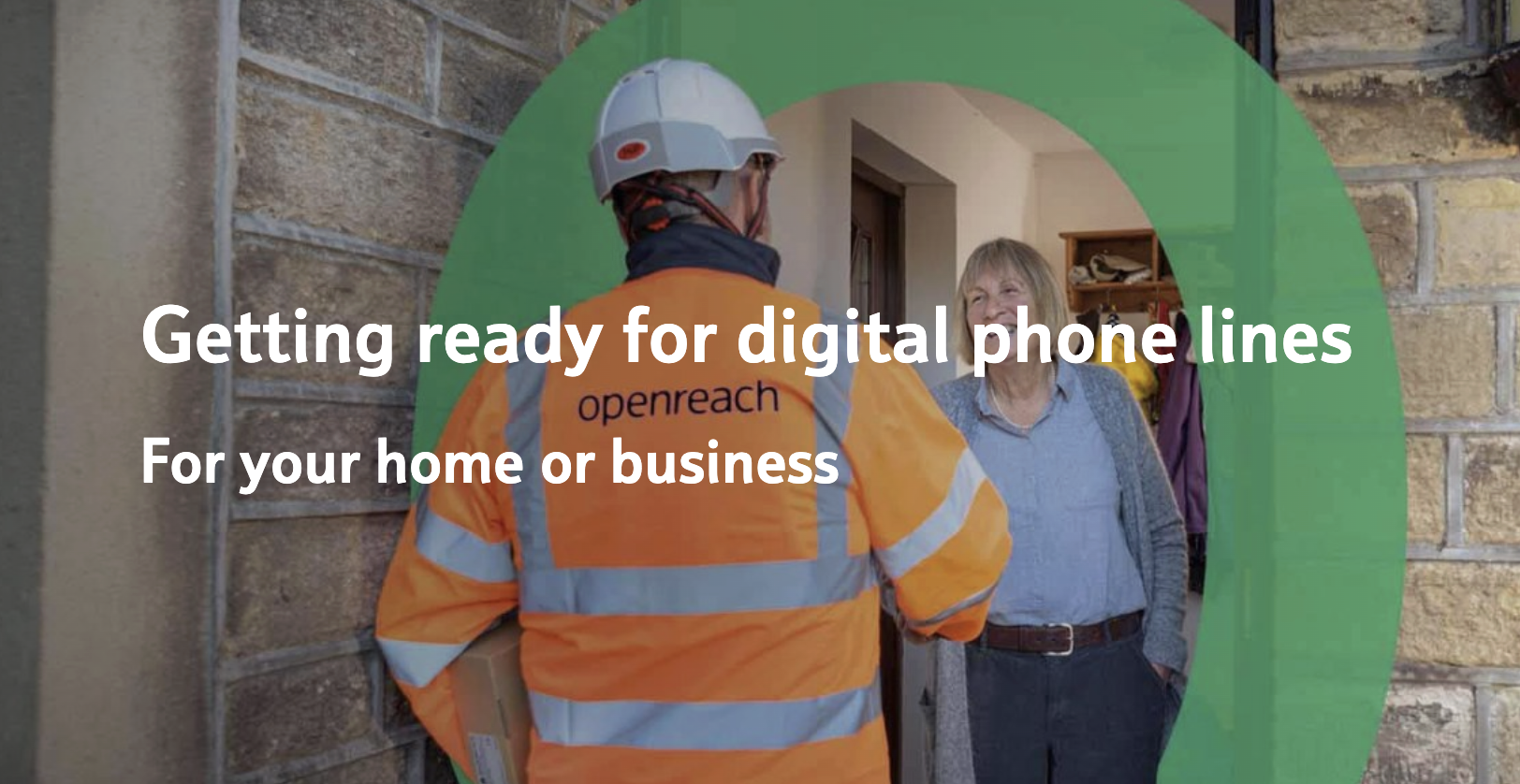
This isn’t new. Openreach issued a stop sell on new supply of WLR products in September 2023, meaning no new analogue phone lines can be ordered. But the clock is ticking loudly, and a surprising number of businesses still haven’t moved.
It’s worth noting this affects more than just voice services. If your business uses ISDN services like ISDN2 or ISDN30, those are going too. ISDN relies on the same PSTN line infrastructure, so when the network closes, all of it goes.
Recommended reading: The BT Switch Off: What It Means and How To Prepare
How many lines are still on the old network?
Progress has been quick so far in 2026. The UK started with over 16 million WLR lines, and more than 90% have now moved to digital services. The count dropped from around 2.5 million in April 2026 to 1.9 million in June, 1.5 million by the end of July and around 1.2 million by late September.

That still leaves a lot to do in very little time. To clear 1.2 million lines by the end of January, the industry needs to move roughly 70,000 lines a week. The closer we get, the busier providers and engineers will be.
Openreach figures show 37,825 lines in Birmingham still waiting to switch. London has the most, with over 235,000. That gap should worry anyone who hasn’t started planning.
Openreach has been clear: there will be no more delays. The January 2027 deadline is locked in. Every ISP and provider in the telecommunications industry must accept all remaining migrations need to happen this year.
What’s happening in 2026 to speed things up?
Openreach isn’t just waiting around hoping everyone migrates in time. They’re using both carrots and sticks to push the pace. Here are the key dates every business should have in their diary.
Price rises throughout 2026
WLR prices are rising significantly in three stages:
- 1 April 2026 – 20% increase over November 2025 pricing
- 1 July 2026 – 60% increase over November 2025 pricing
- 1 October 2026 – 100% increase over November 2025 pricing (double what you’re paying now)
- 31 January 2027 – WLR withdrawal and closure of the PSTN
- February 2027 – Remaining PSTN services migrated to EVAc
In simple terms, if you stay on your old copper line, it’s going to cost you twice as much by autumn. That’s a deliberate move to push providers who haven’t yet moved their end customer base to digital alternatives.
Recommended reading: Best UK VoIP Providers: 2026 Buyer’s Guide for UK Businesses
Free and discounted migrations
On the flipside, Openreach is making it cheaper to move:
- Free connection when migrating from WLR to SoGEA
- Free connection on FTTP (fibre to the premises)
- SoGEA and SoTAP available in FTTP Priority areas from 16 February 2026
- A dedicated migration support team from Openreach to help providers manage the transition
Move now while it’s free, or pay more the longer you wait.
What does this mean for my business?
If your business still relies on a traditional PSTN line for calls, broadband connectivity, alarm systems, or card machines, you need to act. Here’s what’s at stake:
❌ Your costs are going up. Even if you plan to switch later, you’ll be paying a premium for a service that’s about to disappear. Those price rises start in April 2026 and they’re steep.
❌ Your broadband services could be affected. Many businesses still have broadband delivered over a copper phone line, whether that’s ADSL or FTTC. If your internet connection depends on a WLR line, that setup needs to change. Older ADSL services (sometimes called SoADSL in their single-order form) will need to move to a modern alternative.
❌ Your service could be disrupted. Old copper lines are becoming harder for Openreach to maintain. If a fault develops, they may not fix it like-for-like. You could face an emergency upgrade with little time to plan.
❌ You could end up on a bare-bones emergency service. If you do nothing by the deadline, Openreach will move your line to EVAc (Emergency Voice Access). This is a stripped-back, voice-only service. No broadband, no alarm monitoring, no payment terminals, no fax. It’s a safety net for emergencies, not something you can run a business on.
What are my options for switching?
The good news is that there are several solid alternatives, and most businesses will find the switch is actually an upgrade. Here are the main options:
VoIP phone system
VoIP services let you make and receive calls over the internet instead of a copper line. More flexible, usually cheaper, and packed with features like call routing and voicemail-to-email. This is what most businesses are moving to for their voice services.
SoGEA
Single Order Generic Ethernet Access. It delivers broadband over the same copper or fibre infrastructure you might already use, but without needing a phone line underneath. It works with both FTTC and full fibre connections, and your router connects directly to the network with no WLR needed.
FTTP (full fibre)
Full fibre to the premises gives you a direct fibre connection all the way to your building, with much greater bandwidth than copper-based alternatives. It’s faster, more reliable, and future-proof. Free connection offers make it a smart choice if it’s available at your address.
SoTAP
Single Order Transitional Access Product. This is for areas where fibre isn’t available yet. It uses the existing copper line but runs on digital technology at the exchange end, keeping you connected while the network catches up.
Ethernet leased lines
For businesses that need guaranteed bandwidth and rock-solid reliability, an ethernet leased line gives you a dedicated, uncontended internet connection.
Not sure which one’s right for you? That’s where having a good telecoms partner like Best 4 Business Communications makes all the difference.
Is switching actually easy?
Short answer: for most businesses, yes. The migration is usually straightforward, especially if you plan ahead. In many cases, there’s no engineer visit needed, and your phone number stays the same.
The key is getting started early. Here’s a simple checklist to follow:
✅ Audit your current setup. Work out which services rely on your phone line, including alarm systems, EPOS terminals, and lift lines.
✅ Check what’s available at your address. Full fibre, SoGEA, or SoTAP. Your provider or ISP can check using Openreach’s asset reports.
✅ Talk to your equipment suppliers. If you use telecare devices, alarms, or payment terminals, check they work on a digital connection.
✅ Speak to a telecoms specialist. A good provider will handle most of the heavy lifting for the end customer.
✅ Plan your timeline. Businesses that act early get the best deals and avoid the rush.
Are there any sensitive cases to watch out for?
Yes. Some businesses need extra care when migrating:
- Critical National Infrastructure (CNI) – Lines supporting essential services need careful planning. There are also regulatory considerations around how these services are moved.
- Telecare and vulnerable customers – Businesses that provide telecare services or support vulnerable customers need to ensure their equipment works with digital alternatives. Openreach has launched a service called Prove Telecare to help with exactly this.
- Alarm and security systems – Many older alarm systems dial out over an analogue phone line. Speak with your alarm provider about upgrading before your line switches over.
If any of these apply to you, start now. These migrations often take longer.
What happens after 31 January 2027?
The PSTN shuts down. No more traditional copper phone service. No more ISDN. If you haven’t migrated, your service stops working as you know it.
Remaining lines move to EVAc. From February 2027, any services still on the old network get migrated to Emergency Voice Access, a stripped-back, emergency-only service. It’s not something you want to rely on for running a business.
Why businesses are choosing B4BC for the switch
At B4BC, we’ve been helping UK businesses move from legacy copper services to modern digital communications for years. We know it can feel like a headache, but it doesn’t have to be.
- We keep it simple. No jargon, no hard sell. We’ll recommend the best fit for your business in plain English.
- We handle the hard work. Whether you need to move a single phone line or an entire estate of ISDN and WLR services, we take care of the whole process.
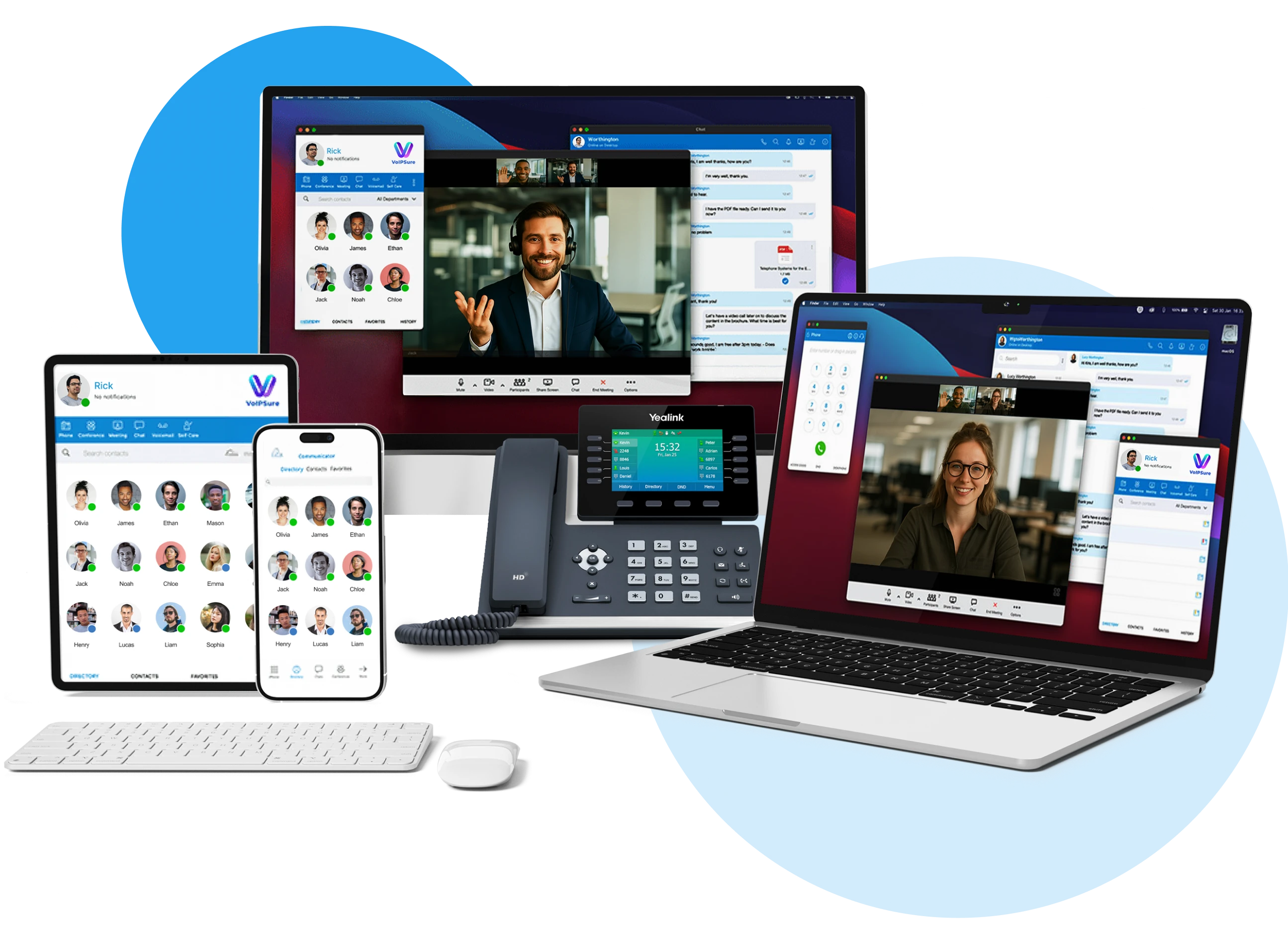
- We offer award-winning solutions. Our cloud phone system, VoIPSure, is trusted by businesses of all sizes, from sole traders to household names like the NHS and Citizens Advice.
- We’re here for the long haul. Our UK-based support team is always on hand if you need us.
Ready to make the switch?
The WLR Withdrawal has already begun. Don’t wait for price rises to bite or the deadline to catch you off guard. The sooner you move, the smoother it’ll be and the more you’ll save.
Give B4BC a call on 0333 366 3333 or drop us an email at sales@b4bc.co.uk. We’ll take it from there.