Best UK VoIP providers: 2026 buyer’s guide for businesses
Are they getting rid of landlines in 2026? What you need to know
The short answer is yes, traditional copper-wire landlines are being phased out. In the UK, BT is switching off the old PSTN network by January 2027, and in the US, carriers like AT&T are targeting 2029 for their copper retirement.
Your phone service isn’t disappearing, though. It’s moving to digital alternatives like VoIP and fibre-based connections. Below, we’ll cover why this is happening, what it means for your business, and how to prepare for the switch.
Are they getting rid of landlines?
Yes, traditional copper-wire landlines are being phased out. The old analogue infrastructure is ending, but phone service itself isn’t disappearing. Instead, it’s moving to digital alternatives like VoIP (Voice over Internet Protocol) and fibre-based connections.
In the UK, BT is completing the PSTN switch-off by January 2027. PSTN stands for Public Switched Telephone Network, which is the copper-based system that’s carried voice calls for over a century. Once it’s gone, all voice services will run over broadband instead.
- UK timeline: BT ending all traditional landline connections by early 2027
- US timeline: AT&T and other carriers phasing out copper-based landline service, targeting near-total retirement by 2029
- What stays the same: Your phone number and ability to make calls remain, just delivered over the internet rather than copper wires
So the short answer? Landlines as a technology are going away. Landlines as a service are simply changing how they work.
Why are landlines being discontinued?
Landlines are being phased out for practical and economic reasons rather than convenience. The existing network was never designed to support modern communication needs, and maintaining it is becoming increasingly difficult.
Ageing copper infrastructure
The copper telephone network has been around for well over a hundred years. That’s impressive longevity, but it also means the physical cables are wearing out. Repairs are getting harder to manage, and fewer engineers have the training to work on legacy systems.
It’s a bit like keeping a vintage car running. At some point, finding parts and people who know how to fix it becomes more hassle than it’s worth.
The cost of maintaining old networks
Telecoms providers spend significant money keeping copper networks operational, with AT&T alone spending $6 billion annually on maintaining its copper wire centers. Digital infrastructure, by contrast, costs less to run over time. Companies like AT&T and BT have decided to retire the old technology rather than keep patching it up indefinitely.
The investment is shifting toward networks that can actually improve and scale.
The shift to internet-based communication
Most households and businesses already rely on broadband and mobile for day-to-day communication. Landline usage has dropped dramatically over the past two decades, with PSTN subscriptions declining 16% in just 12 months.
VoIP and fibre deliver better call quality and more features than copper lines ever could. The writing has been on the wall for a while now.
The UK PSTN switch-off explained
If you’re running a business in the UK, this part matters most. Openreach, BT’s network division, is switching off the PSTN and ISDN networks entirely. ISDN (Integrated Services Digital Network) is another legacy system that many businesses use for phone lines and data.

After the switch-off, all voice calls will travel over digital lines delivered through broadband. Every premises using a traditional landline will need to migrate before the deadline.
- What’s ending: Analogue phone lines, ISDN lines, and any service relying on the copper network for voice
- What’s replacing it: Digital Voice services running over fibre or broadband connections
- Who’s affected: Every home and business currently using a traditional BT landline or ISDN service
The transition isn’t optional. But the good news is that digital alternatives typically offer better features and often lower costs.
When will landlines be switched off?
The UK landline switch-off is not a single overnight event. It is happening in stages, with key milestones already passed and further changes planned over the next few years.
Key dates for the UK landline phase-out
The transition is already underway. Openreach stopped selling new PSTN and ISDN lines back in 2023, and exchanges are switching off on a rolling basis.
| Milestone | Date |
|---|---|
| Stop-sell on new ISDN/PSTN lines | Already in effect |
| Rolling exchange switch-offs | Ongoing now |
| Final UK PSTN switch-off | January 2027 |
Some telephone exchanges are switching off earlier than others, so your local deadline might arrive sooner than you expect.
What happens if you miss the deadline?
Your phone line will simply stop working. No extensions or grace periods are expected. For businesses, that means losing incoming calls and customer contact overnight.
Not a situation anyone wants, especially when planning ahead makes the whole thing straightforward.
What will replace traditional landline service?
Traditional landline services are not disappearing without a replacement. Instead, they are being phased out in favour of modern digital alternatives that use your internet connection.
VoIP and cloud phone systems
VoIP delivers calls over your internet connection instead of copper wires. Cloud phone systems, sometimes called hosted PBX (Private Branch Exchange), provide business features without physical equipment on-site.
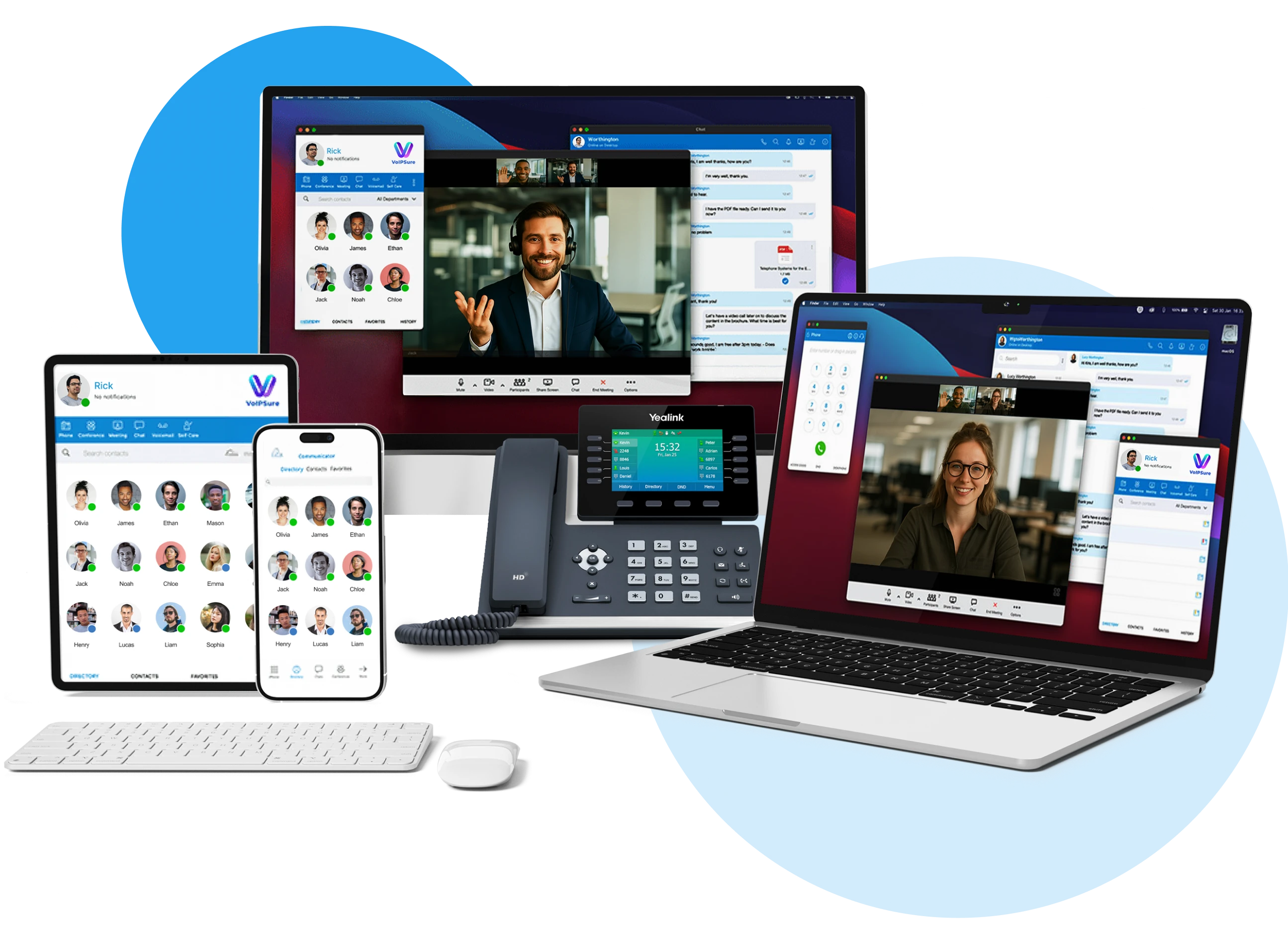
Solutions like VoIPSure, B4BC’s flagship cloud phone system, are designed to make this transition simple. VoIPSure replaces landlines with a fully hosted service that includes call routing, voicemail, mobile and desktop apps, and UK-based support, all managed through one easy platform.

With VoIP, you get features that traditional landlines couldn’t offer. Call forwarding, voicemail-to-email, and CRM integration come standard with most providers.
Mobile and 5G connectivity
Some businesses and homes may rely on mobile networks instead of fixed lines. 5G offers speeds and reliability suitable for voice calls, working as either a primary phone service or a backup option.
This approach works particularly well for businesses with mobile workforces or multiple locations.
Hybrid business phone solutions
Many organisations combine VoIP desk phones with mobile apps and softphones. A softphone is simply an app that lets you make calls from your computer or smartphone using your business number.
Employees can take calls on any device, anywhere. Ideal for remote and hybrid working setups.
How does landline switch affect UK businesses?

The landline switch affects more than just phone lines. For UK businesses, it has direct implications for how calls are handled, how systems are set up, and how future-ready their communications are.
Business phone systems and call handling
Legacy PBX systems connected to ISDN will stop working after the switch-off, requiring migration to modern cloud alternatives. Call routing, hunt groups, and auto-attendant features all need migrating to cloud alternatives.
Here’s the silver lining: this is an opportunity to upgrade features rather than just replace like-for-like. Modern cloud phone systems offer capabilities that older equipment simply couldn’t match.
Broadband and internet connections
VoIP requires a stable broadband connection. If your current internet struggles with video calls or large file transfers, it might not handle voice traffic reliably either.
Businesses may want to consider upgrading from FTTC (Fibre to the Cabinet) to FTTP (Fibre to the Premises) or a leased line. FTTP delivers fibre directly to your building, while FTTC uses fibre only partway, with copper for the final stretch.
Alarms, CCTV, and connected devices
This is the bit that catches many businesses off guard. Plenty of equipment relies on analogue lines without anyone realising it.
Commonly affected devices include:
- Intruder and fire alarms
- CCTV systems with remote monitoring
- Card payment machines
- Door entry systems
- Lift emergency phones
- Fax machines
Each of these needs checking and potentially replacing with digital or mobile alternatives. Worth auditing your setup sooner rather than later.
What are the benefits of moving from landlines to VoIP?

Moving away from traditional landlines is not just about keeping up with the switch off. For many businesses, VoIP offers clear practical benefits that improve how teams communicate, work and manage costs.
Lower costs and predictable monthly bills
VoIP typically costs less than traditional line rental plus call charges, with businesses able to reduce telecommunications costs by up to 50%. Bundled minutes and flat-rate pricing make budgeting easier. You also won’t need separate voice and data lines, which simplifies your setup.
Advanced call features for business

Features that previously required expensive PBX hardware now come standard:
- Call forwarding: Route calls to any device or location
- Call recording: Built-in for training and compliance
- Auto-attendant: Professional greeting and menu options
- Call analytics: Track call volumes and patterns
- CRM integration: Connect calls with customer records
Flexibility for remote and hybrid teams
Staff can make and receive calls on their business number from anywhere. Desktop apps, mobile apps, and desk phones all work together seamlessly.
No physical presence in the office required to stay connected with customers or colleagues.
Improved reliability and call quality
Modern VoIP systems offer high uptime guarantees. HD voice quality is noticeably clearer than traditional landlines. Cloud-based infrastructure includes built-in redundancy, so if one server has issues, calls automatically route through another.
Can you keep your phone number when landlines go away?
Yes, in most cases. Number porting allows you to transfer existing numbers to VoIP. Your new provider handles the process, and it’s usually straightforward.
Some numbers in very rural areas may have complications, but this is rare. The vast majority of businesses keep their existing numbers without any issues. Your customers can still reach you on the same number they’ve always used.
How to prepare your business for the landline switch
The landline switch may feel a long way off, but preparing early gives your business more choice and less stress. Taking a few practical steps now helps ensure a smooth move to digital calling when the time comes.
1. Audit your current phone setup
List all phone lines, numbers, and connected devices. Identify any equipment relying on analogue connections. Check contracts and notice periods with current providers.
This gives you a clear picture of what needs to change.
2. Check your broadband connection
VoIP works best with reliable internet and sufficient upload speed. Consider whether your current broadband can handle voice traffic alongside data.
FTTP or a leased line may be worth exploring for larger teams or call-heavy businesses.
3. Compare VoIP providers and features
Look beyond price to support quality and feature set. Check for UK-based support and clear SLAs (Service Level Agreements). Ask about migration assistance and installation timelines.
The cheapest option isn’t always the best value.
4. Plan your migration timeline
Don’t wait until the deadline approaches, especially since only one in five businesses are fully aware of the PSTN switch off. Allow time for testing and staff training. A phased approach reduces the risk of disruption and lets you iron out any issues before going fully live.
5. Train your team on the new system
New features only add value if staff know how to use them. Most cloud phone systems have intuitive interfaces, but a bit of training goes a long way.
Your provider can offer onboarding support and training resources.
Talk to a UK telecoms specialist about your switch
So, are they getting rid of landlines? The answer is yes. Landlines are being discontinued, but better alternatives exist. The transition is manageable with the right support, and most businesses find they end up with a more capable phone system than they had before.
B4BC helps UK businesses migrate from traditional landlines to VoIP with minimal disruption, same-day installation options, and 24/7 UK-based support.
Get in touch to speak with a telecoms expert about your switch.
Are they getting rid of landlines FAQs
Your landline should still work in 2026, but it’s in its final year. The UK is moving calls onto digital services in 2027, so it’s smart to plan your switch early.
Most people are switching to digital phone services, often bundled with broadband. Businesses are moving to VoIP systems, while some households rely solely on mobiles.
Landlines are being replaced by digital phone services that use your internet connection. You can still use a handset, but calls are made using VoIP technology.
BT is moving customers to digital voice in stages, with the traditional landline network switching off in 2027. Switching early helps avoid a rushed change and reduces disruption.
If you rely on it, you do not need to lose it completely. Switching to a digital alternative lets you keep your number while future-proofing your phone service.
